
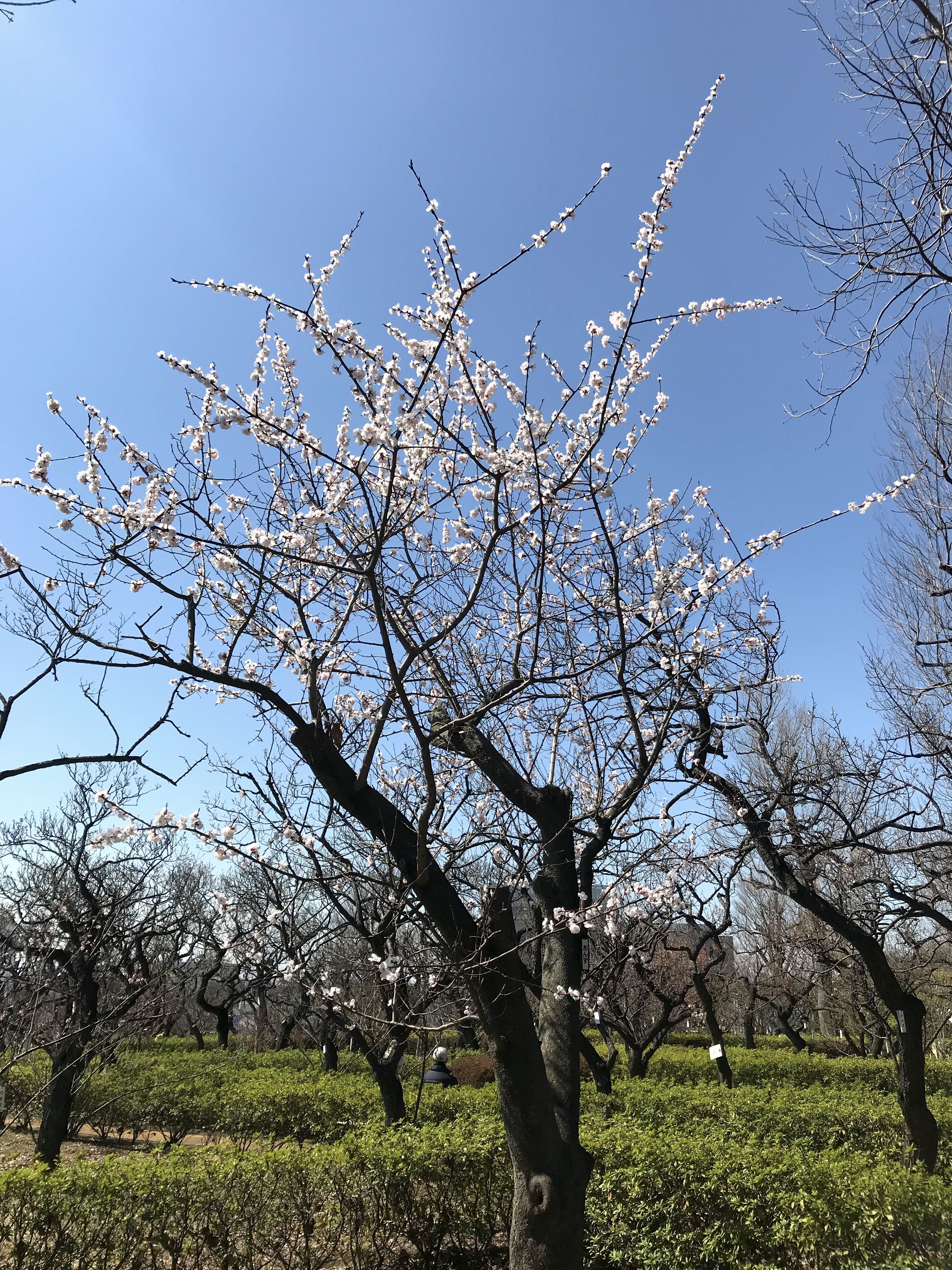
If somebody tries to tell you that Japan’s plum season is better than cherry blossom season they are full of shit. They are jaded Japanophiles who want to show their intellectual superiority. Yes, 1,300 years ago members of Nara’s imperial court celebrated plum season rather than cherry-blossom season. However, this was well before anyone was able to crack open a can of Asahi beer under a cherry tree.
Plum trees blossom in February. The flowers are pretty, yes, but the short, scraggly trees are a far cry from the elegant cherry trees, which bloom in late March or early April.
Cherry blossom season in Tokyo is more than just looking at pretty flowers. It’s a joyous, communal celebration of spring. It’s a time when crowds of people descend upon Tokyo’s parks with no ill-will or grievances and simply enjoy the beautiful freedom of the moment. Then a week later the cherry blossoms fall to the ground and die and it’s back to business as usual.
I freakin’ love cherry blossom season in Tokyo. I lived there for almost ten years and the only time I missed out on the party was the Covid year of 2020 when they decided it probably wasn’t for the betterment of the common good to have hordes of drunkards packed to the gills in Yoyogi Park.
I moved to Singapore three years ago, and Singaporeans love Japan. Some Singaporeans have told me their lifelong dream is to visit Japan during cherry blossom season. I told them I would share the secret cherry blossom spots in Tokyo. Except there are no secret cherry blossom spots in Tokyo. If there is a cherry tree down a dark alley in Daitabashi, someone will lay out a mat, grill up some sausages over a little hibachi grill and crack open a Strong Zero chuhi.

While the most-famous cherry blossom viewing spots in Tokyo are sure to be teeming with social media influencers, they are still worth a visit, especially if this is the first and only time in your life you will visit Tokyo in spring. Every park has a different flavor, so hopefully this guide will give you an idea of what viewing spot is best for you.
Before you buy those plane tickets, be sure to check the Japan Meteorological Agency’s annual cherry blossom forecast. It is usually released in February and is generally accurate.
Without further ado.
Shinjuku Gyoen
When I was editor at Tokyo Weekender magazine I used to tell my writers to avoid using Japanese words in their articles unless the words are already part of the English vernacular, like sushi or karaoke. Foreign words turn-off readers. I am choosing to ignore this rule.
Sakura, or cherry blossom, is pretty commonplace. Hanami is more Japan-specific. Hanami translates as “flower viewing,” and has come to describe the act of picnicking under cherry trees and viewing the blossoms. Cherry blossom season is often called “hanami season.”

Koen is the Japanese word for park, but there is a distinction between “koen” and “gyoen.” Koen is any old park used by commoners that has the benches, slides, swings, whatever it is you wanna put in your park. Gyoen translates as “imperial garden,” and is a park that is on land that is or once was under the purview of the Imperial Household Agency.
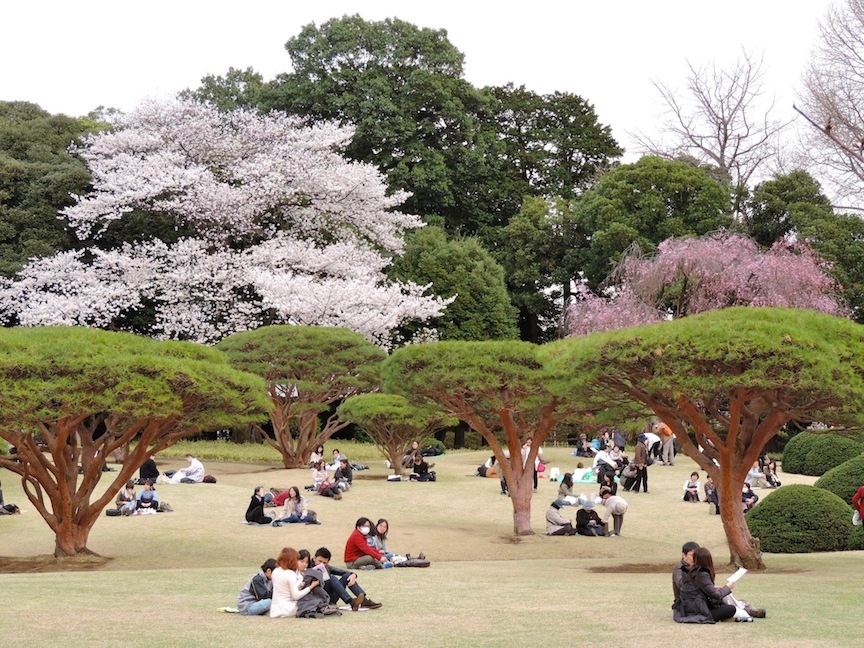
Shinjuku Gyoen is one such plot of land. Nearly the size of Disneyland, this expansive acreage was once home to a daimyo lord who built the original garden. Following the Meiji Restoration the land was turned over to the Imperial Family and was converted to a botanical garden. In 1906 a French landscape architect designed the current layout and the botanical garden reopened as Shinjuku Imperial Garden, or Shinjuku Gyoen.

The garden has more than 1,500 cherry trees and is one of the most popular hanami spots in Tokyo. When I first started working for Tokyo Weekender our office was within walking distance of Shinjuku Gyoen and during cherry blossom season I would have lunch in the park. During one lunch hour my credit card fell out of my pocket. Later that afternoon I realized the card was missing later. I returned to Shinjuku Gyoen and someone had left my card at the park office.
But I digress. Shinjuku Gyoen is the perfect initiation to Tokyo’s cherry blossom viewing experience. Due to the large space you don’t need to worry about finding a picnic spot. Thanks to the strict regulations you won’t be harassed by drunken foreigners. Shinjuku Gyoen does not allow alcohol and security will check your bags at the gate (though you can easily sneak in a high ball or other mixed drink in a water bottle).

That being said there is a nominal ¥500 fee (as of writing) to enter Shinjuku Gyoen during cherry blossom season (it is free the rest of the year). Also, they are fairly strict about no sports activities. No ball-playing, frisbee, or general horseplay. There is one cordoned area where unobtrusive sports are allowed, so be aware of that if you are bringing kids.
Where it’s at: https://maps.app.goo.gl/RQ5AxoL2XQyi4LDZA
Yoyogi Park
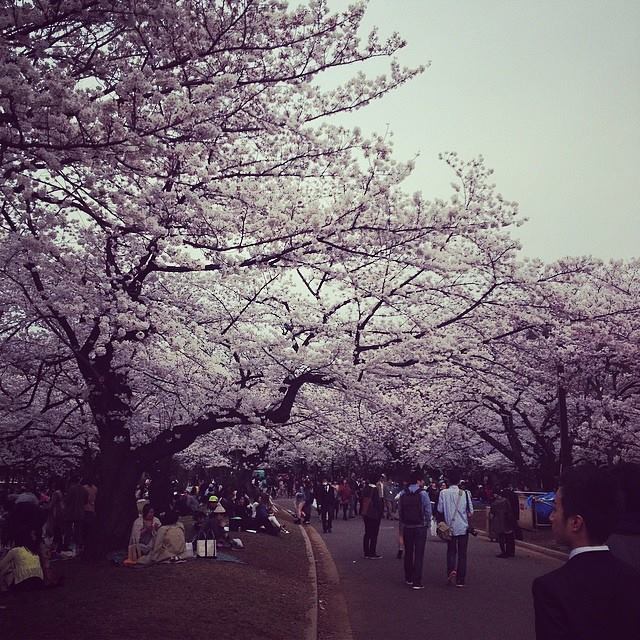
Yoyogi Park is where the party is at. It was here that I was introduced to the true hanami experience, and my life was changed forever. I was like Charlie (or perhaps Augustus Gloop is more apt) walking into Willy Wonka’s chocolate room for the first time.
Even though it is nearly as big as Shinjuku Gyoen, Yoyogi Park has no elbow room during hanami season. Picnic mats cover the landscape like a patchwork quilt. There is music blaring, Frisbees flying, and alcohol being consumed like an Iowa Hawkeye tailgate party.
Let me explain the typical hanami experience. Someone arrives at the park at dawn to spread out the picnic sheet and stake their claim. As friends trickle in, beers are cracked open early and often. A hibachi grill or small camping stove gets lit. Meat is grilled. Everyone brings something to share to eat and it is always fabulous.
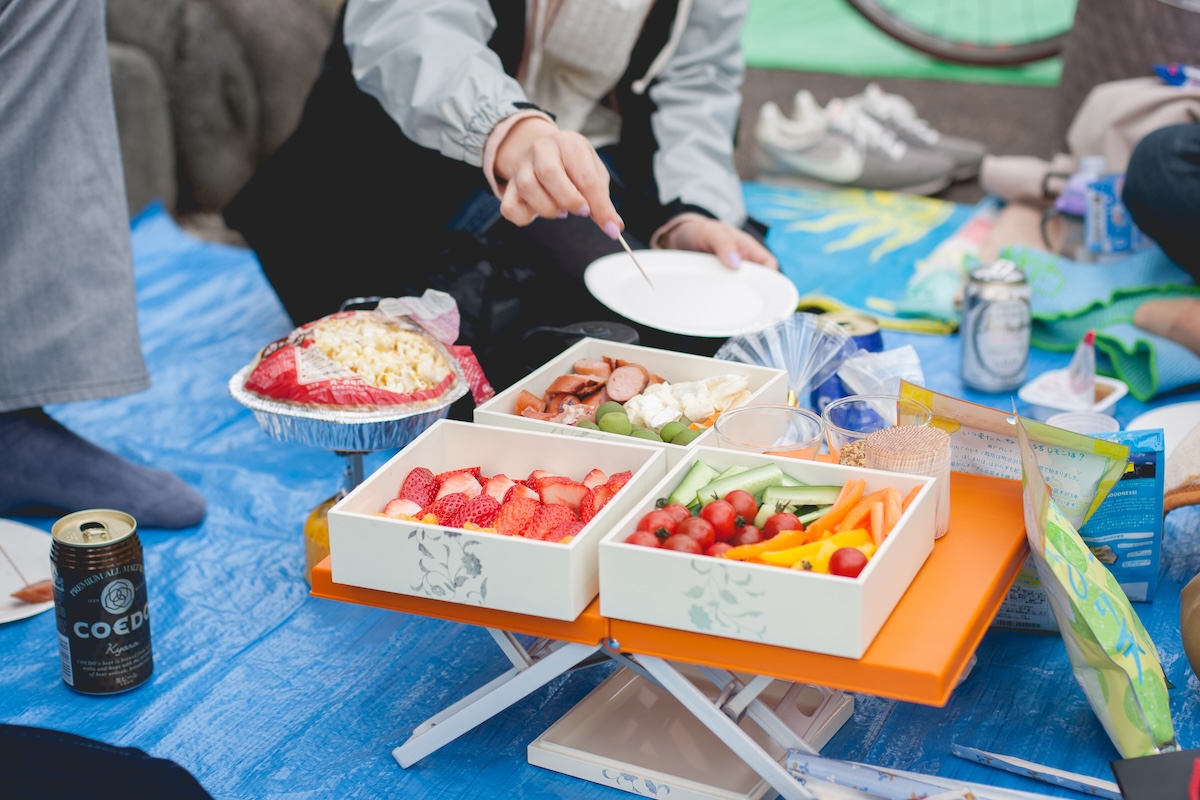
The beauty of a hanami picnic at Yoyogi Park is the anything-goes atmosphere and the devil-may-care attitude of the normally stiff Japanese crowd. On any given day at Yoyogi Park you never know what you might see. The rockabilly dancers perform the twist on the daily. There are street performers, jugglers, musicians, artists, dancers all there to keep you entertained.
Just beware of the toilets. During hanami season there are only portable latrines available and the line can take up to an hour. Dudes can just wobble into the woods to take a leak, but the gals are SOL. The park closes at dusk and security comes to shoo away all the drunks. On that first hanami experience at Yoyogi Park, some friends and myself were peeing on a tree in the middle of the park. Two elderly security guards approached us as we dangled our dillywagglers. They pointed out a balloon hanging from the tree above us and reminded us to take it down. No problem, my dudes.
Anyway, if you based your whole college experience off of Animal House then you would love hanami at Yoyogi Park.
Where it’s at: https://maps.app.goo.gl/ddTRTqj5V6FotpVz6
Inokashira Park
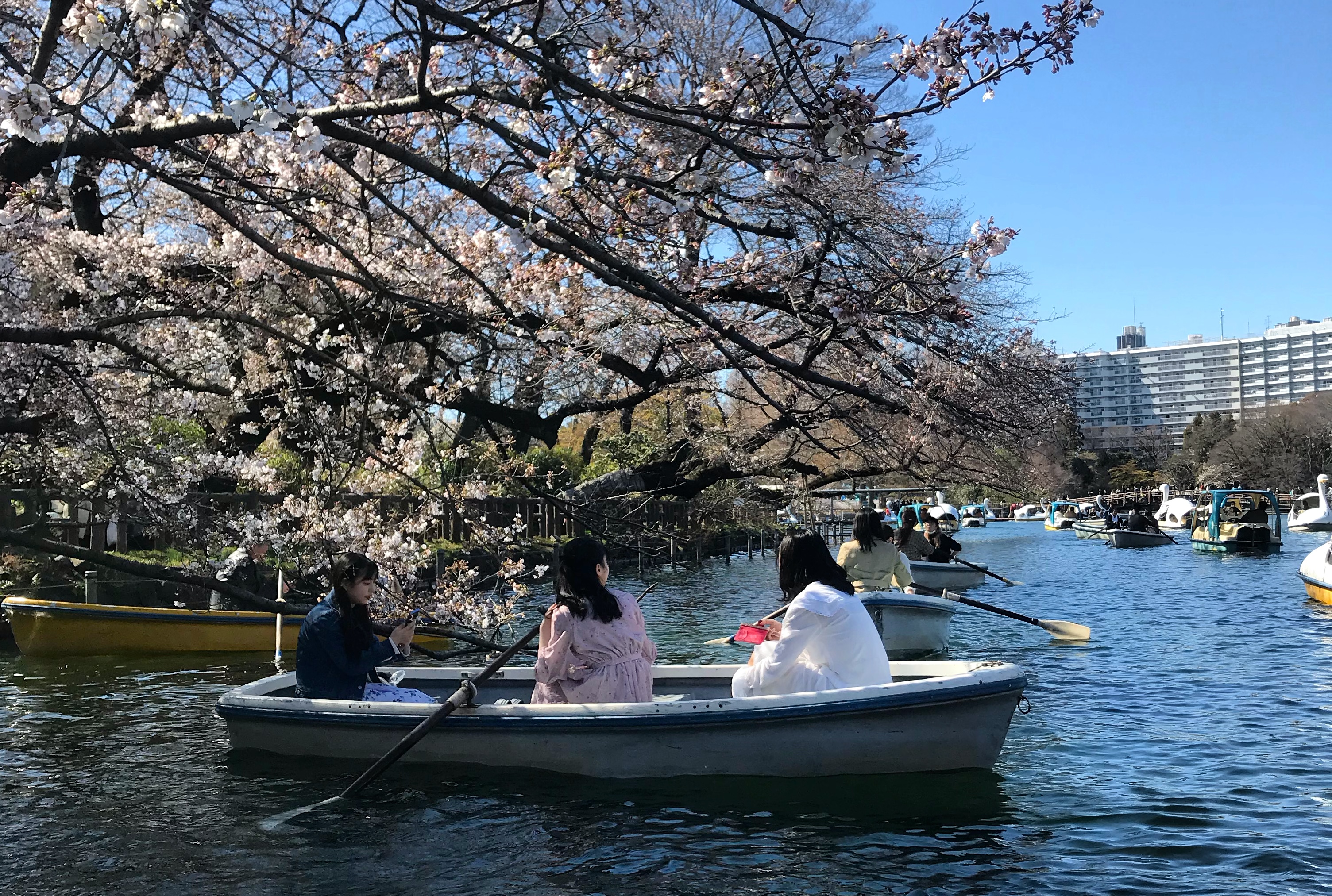
On the west side of Tokyo, Inokashira Park became my favorite park as I got older and somewhat more mature. The park is a bit smaller than Yoyogi Park and is located next to the hip neighborhood of Kichijoji, and it is surrounded by trendy cafés, boutique shops and craft beer bars. The very cool Ghibli Museum is also close by.
The park itself surrounds the scenic Inokashira Pond. There are also playgrounds for kids, a petting zoo and a Buddhist temple dedicated to the goddess of the arts. There are food vendors galore as well as buskers and artisans selling handmade crafts.
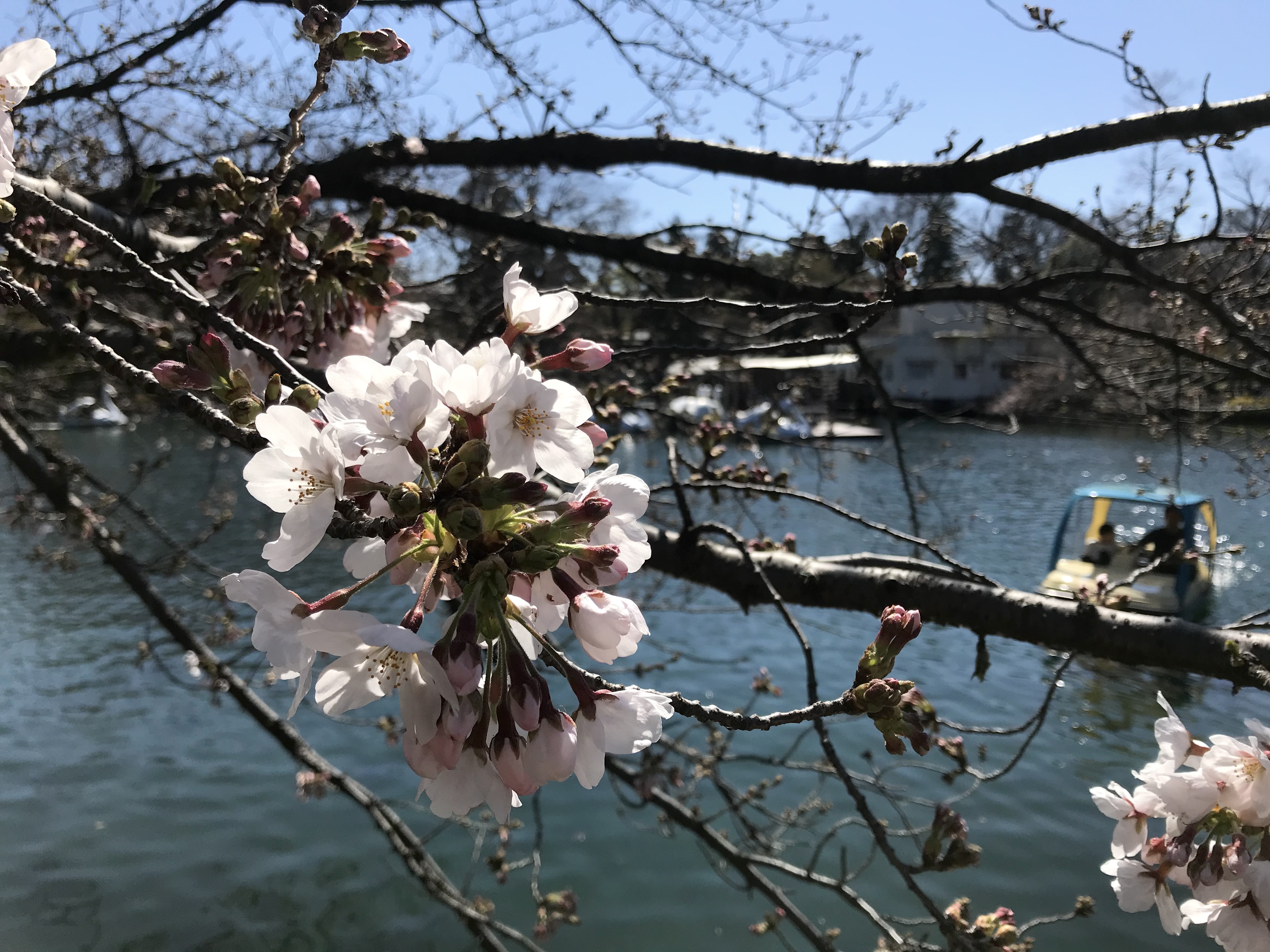
The popular thing to do at Inokashira Park is rent swan boats, paddle boats or row boats and gently paddle around the pond taking in the beauty of the cherry blossoms that adorn the shores in shades of pink pastel.
Inokashira Park is a good alternative to the swan boats and paddle boats available at the Imperial Palace. The moat surrounding the palace is where you see all the Instagram photos of beautiful people paddling amongst the bucolic sakura scenes. Getting one of the palace boats is a long and complicated process that must be done in person and in cash. If you want to avoid the hassle, head west to Inokashira Park.
There isn’t so much space here for hanami picnics, but it is a lovely park that allows you to enjoy the cherry blossoms in all their glory.
Where it’s at: https://maps.app.goo.gl/mFLNPnwjhkP8EJmV9
Nakameguro
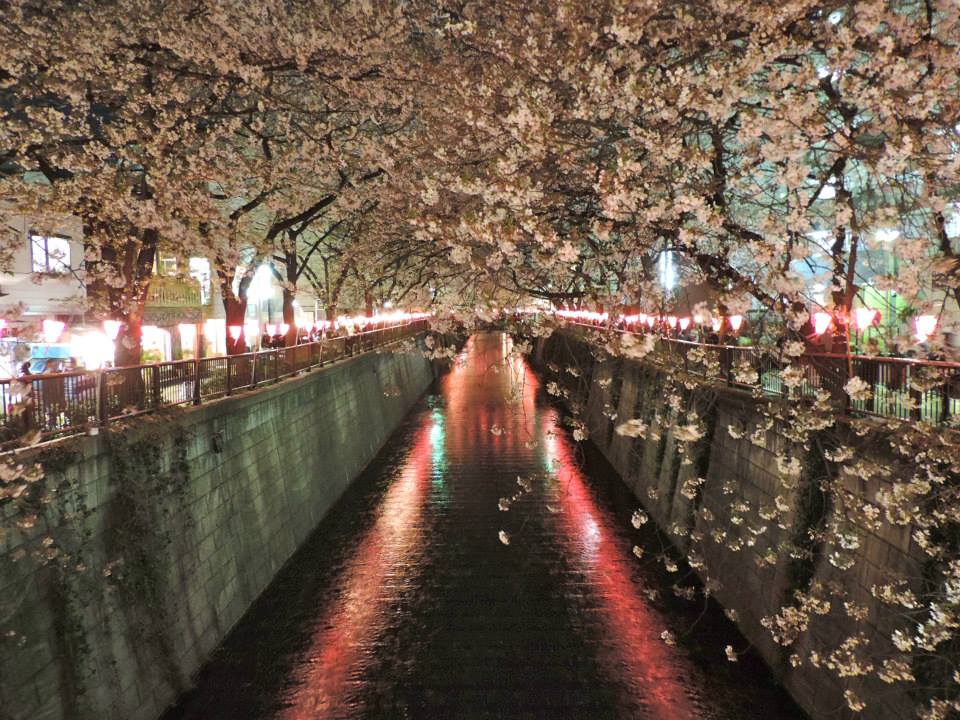
Nakameguro offers a different hanami experience altogether. You won’t find any blue tarps on the ground here as picnicking is prohibited. Instead the celebration takes place at night. For a stretch of four kilometers in urban Tokyo yoshino cherry trees line along the bank of the Meguro River.
The most popular spot along the Meguro River to celebrate hanami is Nakameguro Station where the annual festival is held for two weeks. Here traditional bonbori paper lanterns are hung along the riverbank, illuminating the cherry blossoms at night like a Roppongi night club encapsulated in strawberry Jello.
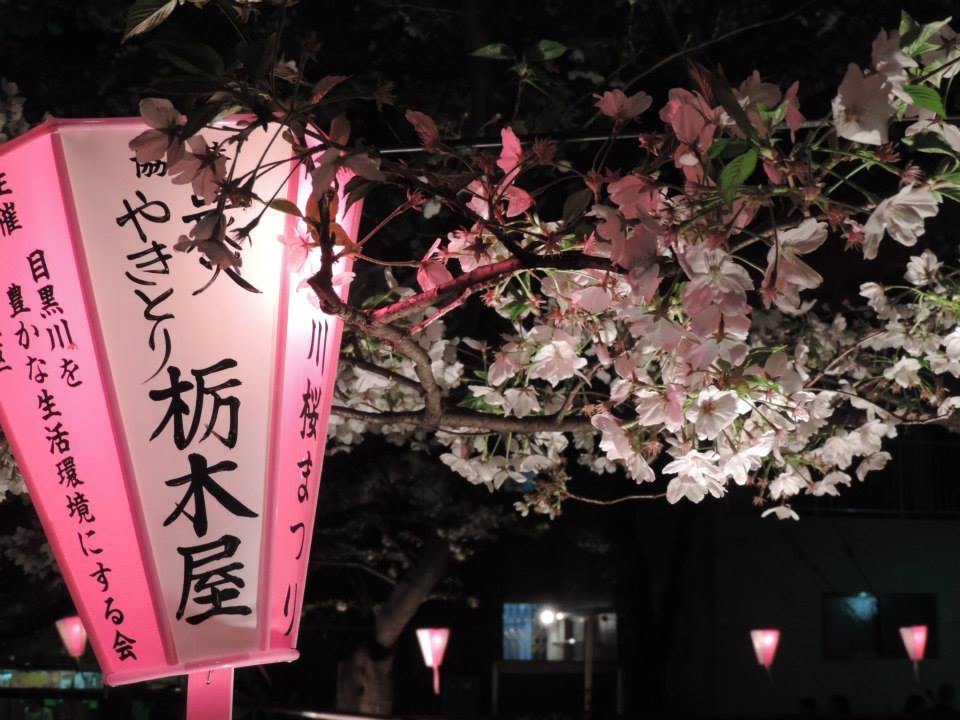
Street vendors grill up festival treats like chicken and beef skewers and yakisoba noodles. Meanwhile the urban shopping area next to the river offers cherry-blossom views from open-front cafés, craft beer bars, and a gourmet pizza restaurant.
The Nakameguro Starbucks Reserve Roastery is one of six Starbucks roasteries in the world. Nakameguro Tsutaya bookstore is also a must-visit. Nakameguro has the blend of modern chic and traditional rustic that makes Tokyo a special place.

Weekends during hanami season are ridiculously crowded and the buzz is electric. The crowd here is younger as it is a popular date spot. If you get claustrophobic be sure to arrive early or visit on a weekday.
Where it’s at: https://maps.app.goo.gl/pLs7i5j7FxVdJLKb6
Rikugien Garden
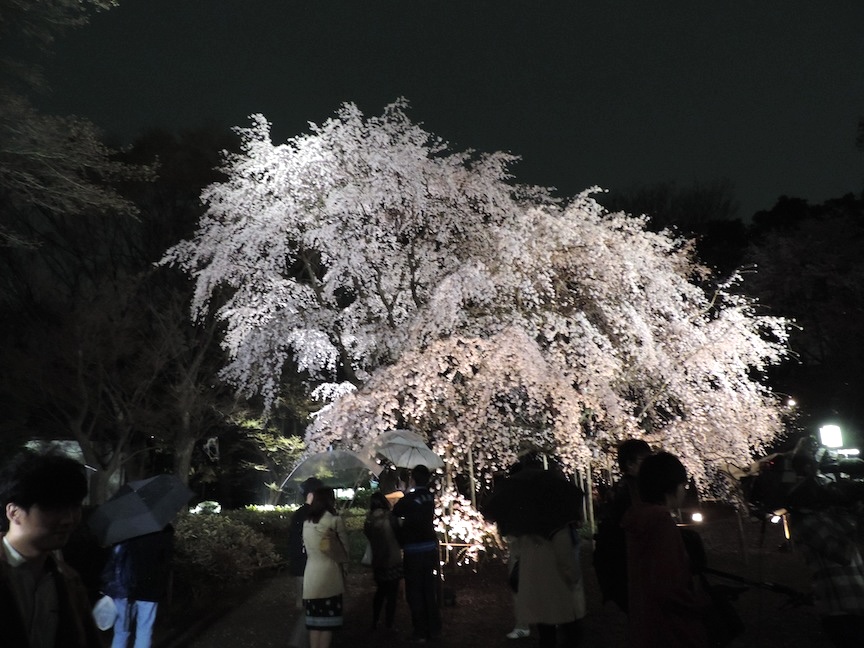
Rikugien Garden is another place to view illuminated cherry blossoms in the splendor of night. This might be the closest thing to a “secret” cherry blossom spot on this list. Let’s be clear though, there are still a lot of people here, they’re just subdued. It’s an older crowd, which makes it much more peaceful and feel less crowded than Nakameguro.
Rikugien Garden is left off the usual tourist blogs because of its location. It is in the residential area of Bunkyo on the northern side of Tokyo, and is a bit of a walk from the nearest train station, Komagome on the Yamanote and Namboku lines. You have to make a special trip to get to Rikugien Garden, and once you’re there there’s not much else to do.
However, Rikugien Garden is well worth the trip no matter the season. The autumn foliage is particularly stunning.

Rikugien Garden itself is poetry in landscape form. The garden was designed from 1695 to 1702 by Yoshiyasu Yanagisawa, a trusted advisor to the fifth shogunate who requested a walking garden. Yanagisawa designed each segment of the garden to represent 88 scenes from six classical Chinese poems, turning a flat piece of land into a visually arresting garden full of waterway undulations and elevation fluctuations. Visitors should follow the path clockwise from one scene to the next.
One small island in the garden’s pond represents Mount Penglai, home to China’s mythological Eight Immortals who some believe is located in Japan. The second bigger island in the pond has two hills representing Izanagi and Izanami, the mythological couple who gave birth to the islands of Japan. A stone bridge, Togetsukyo, is named for a waka poem that describes how the moon moves across the sky.
The best view of Rikugien is from the top of the false hill, Fujishiro-toge, named after the steep Fujishiro-zaka hill in Wakayama Prefecture which offered one of the favorite views of 9th-century emperors. The hill was also immortalized in a waka poem about the execution in 658 AD of the emperor’s son, Arimanomiko.
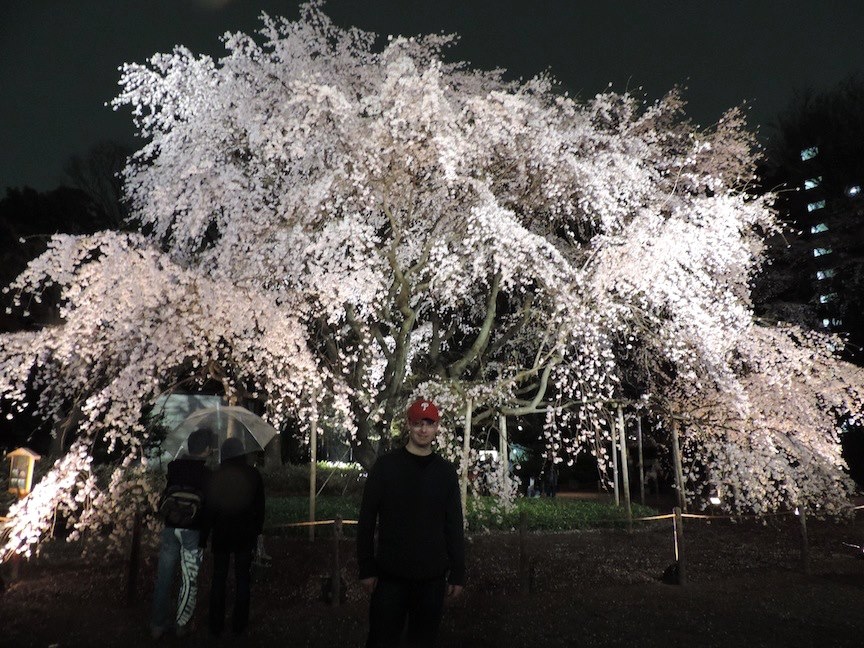
The nighttime cherry blossom viewing at Rikugien Garden is open from 6:30–9pm, with last entry at 8pm. There is a fee. Online pre-booked tickets are ¥900 (the website is in Japanese-only); a limited number of same-day tickets are available for ¥1,100 (cash only).
Where it’s at: https://maps.app.goo.gl/fZ8T1jqAGYokyZi4A
There are of course countless places to experience hanami in Tokyo. These are just the five I can vouch for. All you really need to do to get in the hanami spirit is roll out the blue mat, gather up some friends and crack open some brews. Kanpai!

Feature photo by Brian Scott Peterson
 a Nick in Time